Home

About

Reviews

FAQ

Credit
peepo:// reviews
Welcome to my reviews page! This is a collection of brief reviews on media I've experienced that I'd like to share my thoughts on. They should all be free of spoilers. I've tried to keep them to three or four paragraphs; some will be less, hopefully none will be more. Please be warned that I may be harsh in some of these reviews - I'm not the sort of person to pull my punches when I think they're deserved, so if you see a low number next to something you love, you may want to stop before you read any further.

Click on the tabs above to navigate to different media categories. Within the tabs, I've sorted titles by alphabetical order. Click on the title to expand the box and see the review.

My reviews will contain a score of 0 to 10. These numbers are overall impressions of how well I believe a piece of media succeeded at achieving what I understood to be its artistic vision. A score of 5 is truly average and should not be taken as an indictment. Scores of 0 and 10 are very rarely given.

Works that are personal favorites of mine - which often will not necessarily be ones I gave a high score - will be marked with a little sun .

Click the tab below to get a further explanation on how my scoring system roughly works. Note that I don't pretend this system is perfect - it's simply what works for me and how I like to interact with media.

Scoring System 0: Reserved only for media that actively causes psychic damage to perceive and truly has no redeeming qualities. I honestly can't think of anything I've even finished that I've given this score, so it exists really only as an anchoring point.

1: Incoherent and thoughtlessly designed, but not so much that I was unable to finish. Unable to identify what the artistic vision for it is, or it may be clear that the creators never had one.
Example: Ao Oni

2: Borderline incoherent or otherwise thoughtlessly designed. May or may not lack an identifiable artistic vision; if it has one, it has failed to achieve it so spectacularly that it may have been better off without one.
Example: Zero Escape: Zero Time Dilemma

3: Poorly constructed and has a clear artistic vision that it failed to achieve. Redeeming qualities are present that fail to salvage it. Thoughtlessly designed aspects pull its score down further.
Example: Everhood

4: Poorly constructed and has a clear artistic vision it only partially achieves. Redeeming qualities are present, but are not abundant enough to push the work into mediocre territory; there may also be thoughtlessly designed aspects that mitigate the presence of said redeeming qualities.
Example: AI: The Somnium Files - nirvanA Initiative

5: Perfectly mediocre. It is a piece of media that can be experienced and analyzed. Either lacks in artistic vision or, if present, lacks in execution.
Example: Triangle Strategy

6: Solid with issues. It either has partially succeeded in conveying its artistic vision or lacks one but has plenty of other redeeming qualities.
Example: Tales of Symphonia

7: Good; nothing more and nothing less. If it has an artistic vision, it has too many flaws that hold it back. If it lacks an artistic vision, this is the ceiling for how good it can be. Higher scores are reserved for deliberately crafted art in my scoring system.
Example: The Legend of Zelda: Twilight Princess

8: Great with clear artistic vision but several flaws that hold it back. These flaws are notable, but not so much that they sour or come to define one's memory of the work.
Example: Death Stranding

9: Incredible with only a few flaws. These flaws are so small that they can easily be forgotten.
Example: NieR: Automata

10: Perfect. A score I rarely give. Perfect execution of a lofty artistic vision. If there are flaws, they do not matter or may not be fixable.
Example: Outer Wilds
1000xRESIST
Score: 9/10

1000xRESIST is the kind of work that makes you remember just how high the ceiling for writing truly is. This piece of art is more visual novel than game, and with the way the character models look, you may find yourself wishing at first that they just made it a visual novel instead. But once you get used to the clearly indie graphics, you'll find yourself engulfed in a deeply complex and layered narrative about grief, legacy, and the cycles of trauma we inflict on one another. It's a beautifully crafted experience that isn't afraid to be outwardly political, either, and it may behoove players to do some light research on the 2019-2020 Hong Kong protests before going in just to understand even a little bit of what this game is in conversation with.

Every line of dialogue in 1000xRESIST feels thoughtfully written, and the performance of the voice actors, which may initially come across too uncomfortably real, is as raw and unfiltered as the writing demands it to be. I can't emphasize enough how impressed I was with the writing in this game; it's near-perfect, and what little complaints I have don't take away from what it is as a big picture. Both the story concept and the execution of the narrative are masterfully done. The gameplay leaves much to be desired at times, and the character models look a bit poor, to say the least, but sunset visitor easily makes up for that in their incredible cutscene direction and lighting work.

I will also fully disclose that this game spoke to me on a personal level that may not affect everyone else. I'm an Asian child of immigrants who was subject to racist treatment and ostracization as a youth, and I related to some of the experiences in this game much harder than I expected to, as I went in basically blind. Still, though, even if you can't share in those experiences, I hope you can still connect with 1000xRESIST.

Last Updated: 2026/02/04
Bloodborne
Score: 7.5/10

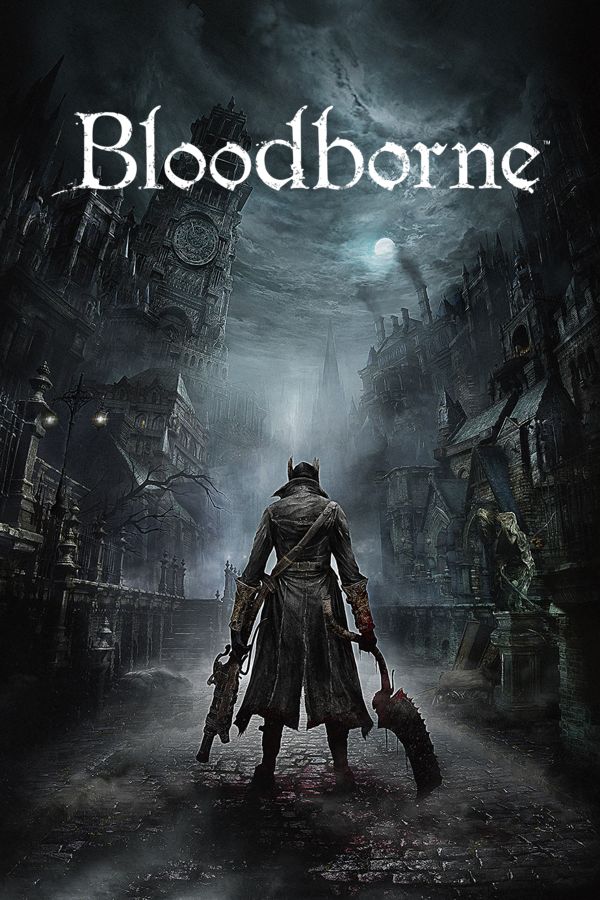
I want to start off by saying that I think that FromSoftware games are kind of overrated. The cult-like following that their games garner feels honestly kind of bizarre given how sloppy so many of their works are. Yet it's undeniable that for all their flaws and jank, there's a hypnotic quality to the vague ramblings of their mad characters, the weight and feel of their gritty animations, and the hopelessly dark nature of their condemned worlds. Bloodborne is by no means a perfect game, and there are many aspects of it I feel are messy and poorly designed. Oftentimes I found it simply infuriating to play, and I personally think the "less is more" approach to FromSoftware's storytelling is usually a cop-out. Despite all of that, I adore this game.

Where the setting of Dark Souls merely rings derivative, Bloodborne's is wonderfully refreshing and memorable. This is a game that oozes style, and it rides the train of its bleeding aesthetics from the very opening frame into its blistering finish... so long as you stay on the tracks. Wander into the horrible Chalice Dungeon system, however, and you'll find that beneath this polished veneer is an extremely wretched, repetitive slog of muck that only true freaks would dare to complete the full circuit of once, let alone multiple times. (It's me, I'm sorry. I'm freaks.)

It's a true tragedy that this game is, as of writing this review, currently locked to the PS4 where it runs at a maximum of 30 FPS. If there ever comes a day where this game can be played at a higher framerate and still look as gorgeous as it does, I think a lot of my frustrations would probably go away. Alas...

Last Updated: 2026/02/04
Blue Prince
Score: 9/10

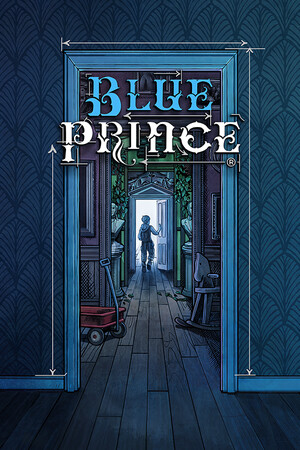
Blue Prince is a game that physically pains me to not be able to give a perfect score, because up until its ending I was so ready to shower it with endless praise that I'm heartbroken I can't. It's a testament to how strong the rest of it is that I still score it so highly, but that single missing point is one of the most critical single missing points of any score I've ever given a game. As of the writing of this review, I still have hope in me yet that developer Tonda Ros will go back and update the ending to give me the last piece of solace I need to truly feel satisfied. But until then, here are my thoughts on the rest of the game.

After beating Outer Wilds, I was left winded with an unscratchable itch that nothing else could satiate. I gave up on my dream of finding another game that could come even close to slaking that desire until Blue Prince found its way in front of me. This is a deeply impressive puzzle game that is not for everyone. It takes an incredible amount of patience and a willingness to truly think outside the box to succeed. I do think that most players have what it takes to reach Room 46, the most basic ending of the game. But to uncover every last stone and tie up every loose end requires an enormous amount of thinking, note-taking, and retracing one's steps, and it is something that most people would honestly not enjoy.

Still, the central conceit of Blue Prince's gameplay loop is impressively clever. I went into the game expecting nothing and came out shocked by how much attention was paid to ludonarrative harmony; each gameplay mechanic has an in-universe lore explanation, and this lore is so much more intricate than I ever would have imagined. The prose, too, is breathtaking in its elegance, and I found that my first impression of this being a kitschy indie game with purple prose was completely false. Even the roguelike mechanics, which I have a tendency not to enjoy, were well-designed, and honestly I found that it was very easy to manipulate the conditions of the game to achieve the outcomes I wanted. This is a rare gem of a game that both exudes and rewards cleverness. I just wish its "true" ending felt better.

Last Updated: 2026/02/04
Clair Obscur: Expedition 33
Score: 7.5/10

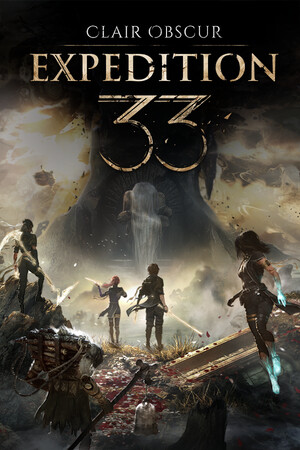
Conversations about whether Clair Obscur: Expedition 33 counts as an indie game or not aside, it is certainly not the fully polished experience that it may appear to be from still images. Clair Obscur has plenty of rough edges; some have a beautiful veneer placed over them that help you pretend they aren't there, while others are just plainly issues. The game's commitment to emulating the old JRPG greats, for one, is a huge flaw, as this game suffers from the same problem that so many other JRPG greats do: the opening hook is terrific, and then the quality of everything after that takes a steep nosedive, before slowly working its way back up into a somber conclusion.

I punish wasted space very hard, and Clair Obscur is filled with it. Too much time is spent on things that do not matter, and too little is spent with the things that do. It's hard to call these outright flaws when it's clear that much of this is by design, but it's left me with somewhat of a foul taste in my mouth regarding my opinion of the game. This isn't to downplay how good I felt the things that mattered were - I think they were great - but my god, does the game make you work for those moments of good sometimes.

The gameplay, in my opinion, is a slog. The overrated gimmick of "it's a turn-based RPG where you actually have gameplay during turns" is just a newgen way of saying it's Paper Mario. Because at the end of the day, the gameplay is just Paper Mario. And Paper Mario is a fine game, but Clair Obscur honestly does very little to innovate on its formula, and the end result is a corny gameplay loop that, in its overabuse of delays, relies more on memorizing parry timings than actually rewarding good animation reading skills. There's also not enough cutscene or dialogue, and I mean that. "Do you even like playing video games or do you just like watching movies?!" you ask, and I look you in the eye honestly and say, "No <3".

Last Updated: 2026/02/04
Death Stranding
Score: 8/10

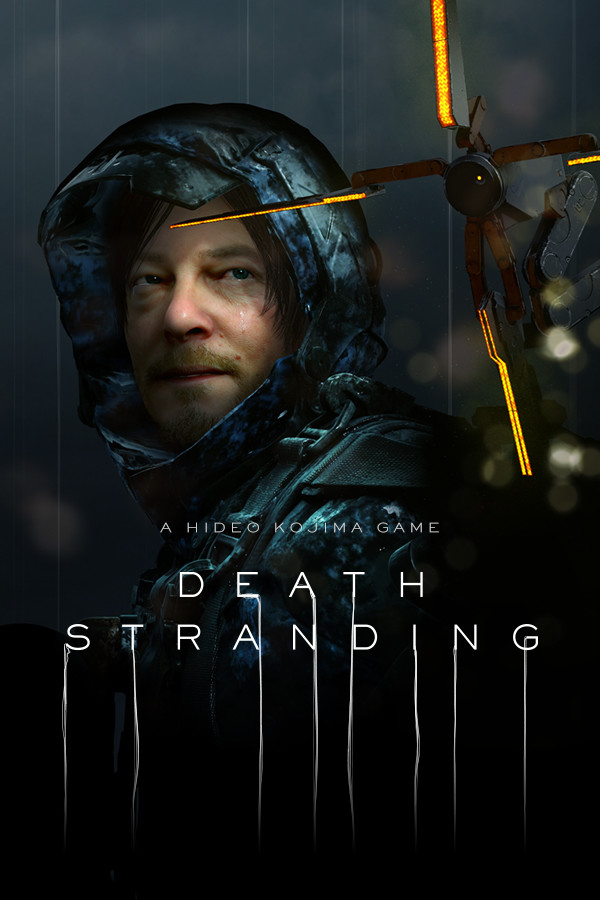
After Hideo Kojima's rough departure from Konami and the subsequent formation of an independent Kojima Productions, many people awaited the announcement of his new project with bated breath, excited for the next work from the stealth auteur that had just created Metal Gear Solid V, an indelibly fun video game. Imagine the people's despair when we discovered that his next game was not going to be tactical espionage action, but rather some "strand type gameplay" that basically seemed to just be a walking simulator with some additional communal building doodads. And walking indeed do you do in Death Stranding, one of my favorite video games that is about the extremely cutting-edge concept of delivering packages to people.

This is a game you play with the full expectations that you are probably not going to enjoy the gameplay much. I personally found the gameplay loop tolerable; at its best, it was relaxing, and at its worst, it was annoying and pissed me off. Death Stranding is carried entirely by its presentation and its story, and even the quality of those can be questionable sometimes. Still, it's got a lot of heart, and at the end of the day this is actually a really heartwarming game about family and love.

Last Updated: 2026/02/04
Disco Elysium
Score: 10/10

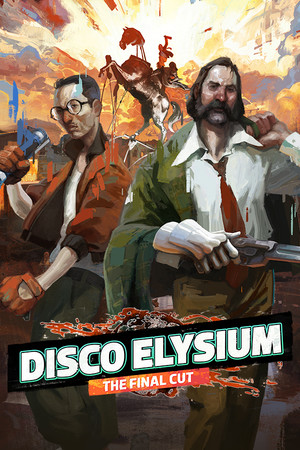
Disco Elysium is a work of art that almost defies belief. It's honestly kind of inconceivable that a small indie studio like ZA/UM could create this much prose - over 1.2 million words of it, in fact - and have all of that prose be of a quality that more closely resembles literature than the typical sophomoric video game writing fare. The voicework and art that support this writing are superb, and all of these add up into an incredible experience for gamers who are happy to be readers more than they are gamers. This is the perfect CRPG, and there are no meaningful flaws that take away from its core message... unless you are me and the slow walk speed makes you want to commit crimes, but I am going to be a good pickle and not dock a point for it because I know I'm just wrong.

Last Updated: 2026/02/04
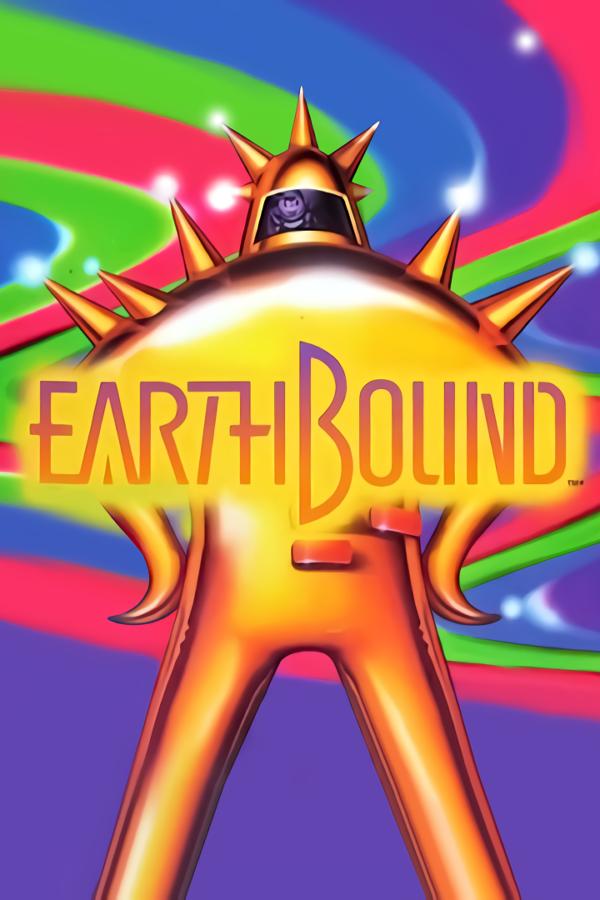
Earthbound
Score: 6/10

I genuinely feel like I missed something with Earthbound. It's easy for me to see the ways in which this RPG was genre-defining and deeply influential for so many other works it inspired that I liked much more, from Undertale to Yume Nikki. But I can't see what those other artists saw in Earthbound almost at all. This game is, in every way to me, just an inferior and less-realized version of its sequel, Mother 3. The only advantage it has is that it has an official English translation.

The gameplay by today's standards is horrendous, though with a historic lens I can see that it's actually mildly above-average for a turn-based RPG, with its HP ticking mechanics and the fact that you can technically outrun enemy encounters (or even avoid them entirely once you're a high enough level). The visuals are colorful and bright and fun, and if nothing else, I can recognize that this is a truly unique game. The Mother series was one-of-a-kind, and no other games were like it or would be like it for a long time.

But there just isn't anything of substance that I really care for in Earthbound. I didn't like the characters, the writing is so-so, the music is alright enough, and all-in-all I just kind of don't really find the game all that great. I'm totally open to having it explained to me why Earthbound went over my head, but until then it's a 6.

Last Updated: 2026/02/04
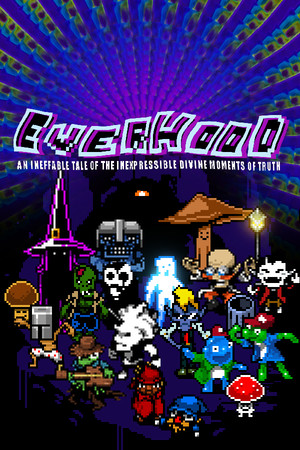
Everhood
Score: 3/10

Just reading the subtitle on the cover of Everhood ("an ineffable tale of the inexpressible divine moments of truth") should be more than enough to tell you that this game is the posterchild of the phrase "fake deep", a phrase that I abhor and try with every fiber of my being not to use. It is my job as an art critic to question why the curtains are blue. It should tell you something, then, that no matter how hard I looked, I could find neither sensible meanings nor notable redeeming qualities in Everhood. This game is an overrated, derivative pile of garbage that does nothing but rip off of Undertale, a fact that the creator of the game confesses to openly.

The current trend of minimalism is one that often gets rightfully lambasted for creating very soulless, same-y experiences with very little substance. So easy is it to get caught up in the criticisms, though, that I think we sometimes forget why it became a trend in the first place. Less really is often more when it comes to writing, and the line between thoughtful maximalism and maximalism used to cover up weaknesses is an important one to respect. Everhood is a game that does not, and all of its maximalism serves as nothing but a veneer for an ultimately empty game devoid of an authentic artistic vision.

Barely any meaningful interaction occurs with the vibrant cast, resulting in characters that are mere shells with hardly enough personality to be recalled. Plot twists and visuals are ripped wholesale from other greater works of art with no thought put into the underlying ideas that make those things great, resulting in an experience that is nothing but a series of loud visual impressions that slide off of your mind like water off a duck's ass. Even the lauded rhythm gameplay kind of sucks, as a mechanic unlocked partway through the game completely trivializes it and renders it meaninglessly easy. At the very least, the game is memorably bad, so I have to give it points for that. Also, it gave me a migraine.

Last Updated: 2026/02/04
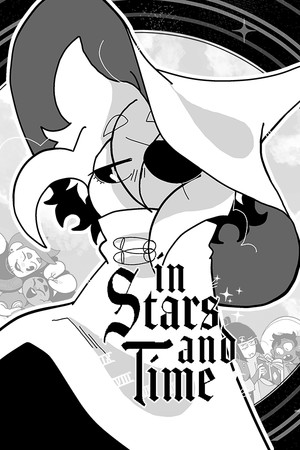
In Stars and Time
Score: 5.5/10

I've been a Tumblr user since 2011. I was there for shoelaces stolen from the president, I was there for infinite chocolate, I was there for the Tubby Custard Machine, I was there for the Once-ler, and I was there for Undertale. As of the writing of this review, I am still an active user of the site. So please believe me when I say there has never been a game more clearly and obviously crafted in a Tumblr thinktank than In Stars and Time, and this is something I state with a fair amount of vitriol.

I went into In Stars and Time expecting something very good, and I came away feeling like I read a teenager's diary. While I can acknowledge that most of the frustration with the game's design came from its desire to craft a ludonarratively harmonic experience, which I can respect, the actual writing itself came across rather juvenile and ultimately did not justify its pain points in my eyes. An overreliance on repetition as a rhetorical tool, while topical, wore its welcome quite quickly, and I found the character interactions sometimes forced and stilted in ways that heavily evoked "the creator of this game really wanted to make a game that would be beloved on Tumblr". I literally rolled my eyes when characters stood on pulpits to espouse about problematic friendship age gaps and other extremely terminally online ideas.

Now, I fully admit this game is probably just not for me. I think a good part of whether or not you will like it hinges on whether you can relate to even one singular molecule of the protagonist, Siffrin. Unfortunately, I cannot. And so the entire crux of the narrative simply does not work. The very root conflict seems utterly ridiculous, and even if I try to deliberately put myself in this poor individual's shoes, the execution of this concept still leaves so much to be desired that I cannot in good faith recommend this game to most people. However, I can respect this game's commitment to its artistic vision even if I feel it did not execute it very well, and for that reason it scores just barely above the true mid 5.

Last Updated: 2026/02/02
The Hex
Score: 7.5/10

The Hex is probably the least well-known work of Daniel Mullins, creator of Pony Island and Inscryption. Which is a bit of a shame, because I think The Hex is one of the coolest, most ambitious little projects I've ever had the privilege of playing. That said, the execution is far from perfect, and at the end of the day, The Hex feels more like a neat tech demo or game-jam proof-of-concept than it does a real, fully-realized video game. Still, it's a short and sweet experience worth trying, and if you have any interest in fully understanding the plot of Inscryption, I would highly recommend playing both Pony Island and this to get the full context of the overarching plot.

Last Updated: 2026/02/05
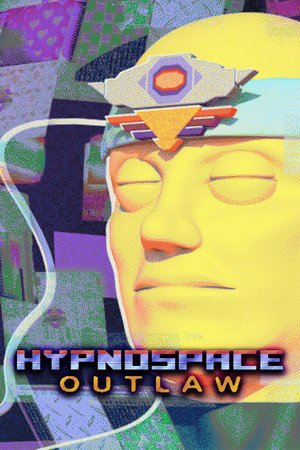
Hypnospace Outlaw
Score: 8/10

Hypnospace Outlaw is one of the most unique and memorable games I've ever played. It is also deeply and inherently not a game for everyone, because a huge part of its appeal is hearkening back to the "old Internet": the Internet before everyone became centralized onto social media, the Internet where everyone had their own website (hi!), the Internet that slowly died away as the 2000s approached the 2010s. As you can see from the site that you're on right now, reminiscing about the old Internet is one of my favorite flavors of nostalgia. And this game slaked that hunger just right.

Hypnospace Outlaw lovingly recreates the era of old with a zany cast of characters, expressed through their kitschy websites. It also contains an appropriate amount of political commentary and several good dollops of humor. The game isn't perfect - I have a few complaints about some of the obscure methods to solve some of its puzzles - but overall it's a super fun piece of art packaged in one of my favorite looks. And hey, we're on Neocities! This game should be some sort of unofficial mascot on here.

Last Updated: 2026/02/05
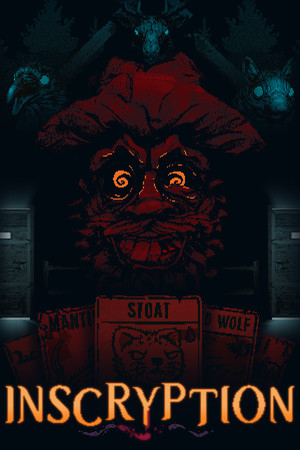
Inscryption
Score: 8.5/10

The first act of Inscryption is the easiest 10/10 of my life. Its perfectly configured grisly atmosphere, down to the sound of clacking teeth-bones and the stark shadows cast across Leshy's gaunt face, pulls you into a gripping, claustrophobic experience that makes your hair stand on end. The gameplay is tight, memorable, and enjoyable enough that a later update would allow you to focus on just that without any of the additional doodads. What happens after the first act is another story.

I want to avoid spoilers in my reviews, so I won't go into the details of what that after entails. But what I will say is that it's really a shame that the rest of the game simply doesn't hold up to the opening act. I don't think the rest of the game is bad, by any means, and in fact, as someone who played both Pony Island and The Hex, I loved the continued nods to the overarching storyline that Daniel Mullins has been planting throughout his narratives. I love the rest of Inscryption, I just don't love it as much as the first act. Perhaps the bar was set too high, and the rest just can't compete.

I also think that Daniel Mullins still hasn't quite figured out yet how to write loveable characters, and that seems to be a missing note throughout all of his projects. In Pony Island and The Hex, the lack of personable characters was fine enough because there were other things to latch on to in the narratives. But Inscryption, at its core, is a game about characters, and it's a shame that you just don't really get invested enough in them to feel the emotional beats as hard as you should. It's definitely been getting better, though, and so I have high hopes for his next project.

Last Updated: 2026/02/05
It Takes Two
Score: 6.5/10

This game, man. I don't even know what to say about it sometimes. If you're looking for a super fun two-person co-op campaign, this game is awesome. But don't go into it expecting to think anything of the writing other than "what in the goddamn?". And that's being charitable. The poor kid in this game is gonna need so much therapy, dude. I don't even know what went wrong, because I've played Brothers: A Tale of Two Sons and A Way Out, both prior projects from director Josef Fares, and I thought both those games were narratively pretty solid. Whatever happened here, I don't know, and I don't really want to know. Great game to play with a partner or friend, though.

Last Updated: 2026/02/05
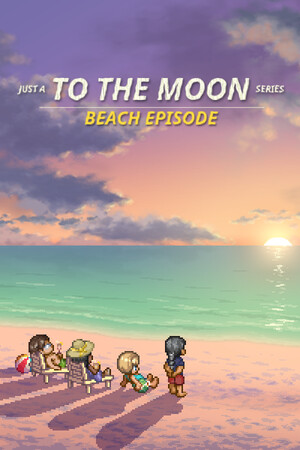
Just a To the Moon Series Beach Episode
Score: 9.5/10

For a while, my feelings on the game To the Moon versus my feelings on the greater To the Moon series were two distinct things. I appreciated To the Moon immensely as a standalone experience, and although I did like the other games in the series a fair amount, I just couldn't see how they were adding up to a coherent overarching narrative. I also had my doubts that Freebird Games was aware of the implications of some of what they had written. I wasn't sure to what extent it was intentional that I was supposed to question the idea that escapism (and its necessary progression: denial of reality) was truly a valid form of coping with loss.

Then came the Beach Episode, and every single strange thing in the series suddenly crystalized into one deeply coherent narrative about grief. All of my doubts dissipated. Every little thing about this series had to have been planned from the start. All of the weird nonsensical ideas that the sequels brought in suddenly made perfect sense, and it became obvious that everything, all of it, was all in service to make the final gut punch of this narrative really land. And land it did. The writing on the wall was there - we always knew it would end like this - but the way it ends like this, the way that it makes us experience that ending, is masterfully done. Just a To the Moon Series Beach Episode is genuinely a masterclass in how to stick a landing, and I will never forget the feelings that it brought me.

Take my rating here with a grain of salt, because it's difficult to score these games, especially one as short as this, given that they're really better seen as episodes in a series. (It's in the name, even.) I await the final installment in the To the Moon series with a great degree of trepidation (possibly even hope). I'm ready for my heart to be broken again; I'm also ready to have it mended. I'm at your mercy, Freebird Games!

Last Updated: 2026/02/05
Lobotomy Corporation
Score: 9/10

Lobotomy Corporation is the best game you probably should not and will never play, and it's a damn shame, because what makes it toxic sludge to touch is what makes it so damn good. The end result is that, for the vast majority of players, this game is best experienced with a pile of mods that add quality of life enhancements to make the journey to the final day realistically accessible. All I can hope for is that every player who uses those mods understands how difficult that journey was intended to be - and how important it is that that journey feels so impossible.

Few games have accomplished ludonarrative harmony as effectively as this game. Sometimes it's achieved through gimmicks - boss battles that mess with your mechanics in ways that match the traumas of the bosses themselves - other times it's achieved in ways so unique and awe-inspiring that those moments will be burned into your memory forever. All of it adds up into an extremely coherent work of art about punishment, redemption, penance, grief, and hope.

It's also possible to play a hundred hours of this game and not even realize it has the aforementioned narrative. This game has serious accessibility issues, but it's really hard to argue that they should be fixed, given the nature of what it's trying to accomplish. This is a game that will haunt you forever if you can discover the ghost waiting inside of it... but she's not easy to find, that's for sure.

Last Updated: 2026/02/02
Metal Gear Solid
Score: 9/10

There are a surprising amount of people who are not aware that Metal Gear Solid is not the first Metal Gear game, which I think is a bit of a shame because, at its core, this is a game in deep playful conversation with its predecessor, Metal Gear 2: Solid Snake, a conversation that Hideo Kojima would later iterate upon again in his most ambitious work to date, Metal Gear Solid 2: Sons of Liberty. But this is not a review about the 2s; this is a review about the 1. And what an ambitious 1 it is.

Metal Gear Solid surely has some rough edges, and it did not age as well as the other games in the initial Solid trilogy. Still, there are some cutting edge concepts introduced in this game that deeply inform Kojima's later works, and if you'll allow yourself to view it through a historical lens, it can be quite the stunning experience. Deranged pseudoscientific rambling about poorly understood genetics concepts aside, Metal Gear Solid's core messaging is about love and hope, and this game actually features my favorite depiction of the Solid Snake character. David Hayter's voicework for Solid Snake has not yet descended into its caricaturistic growl and still sounds relatably real, and that performance lends well to the deeply human crux of Metal Gear Solid.

Big Chungus...

Last Updated: 2026/03/04
NieR: Automata
Score: 9/10

You would be forgiven for seeing the way NieR: Automata is discussed online and dismissing it as a fanservice game with little more substance than the thickness of 2B's voluminous butt. I also don't know how many people are even aware that NieR: Automata is also a sequel to another game called either NieR Replicant or NieR Gestalt depending on which version you play, itself an ambitious, cult classic video game that tried to push the boundaries of its medium a little too hard for what could be accomplished at the time. (If we want to go even deeper, I could mention that even NieR itself as a series is an offshoot of Drakengard, another JRPG series by Yoko Taro, but maybe it's for the best that most people don't know about Drakengard.) The sheer size of 2B's rotund ass has unfortunately eclipsed the legacy of a game that should be in the same conversation as its most similar peer, Undertale.

I mildly jest (not the Undertale comparison, though; I'm quite serious about that), but it does pain me a bit that I feel like the only two things most people remember from NieR: Automata are lewd 2B pictures and its soundtrack. Both things are great, to be sure, but it leaves me wondering how many people actually completed all five of the game's major endings: A, B, C, D, & E. Much like Undertale, you can surely play less than the full game and still get a great experience. But you are missing something extremely crucial if you choose not to fight your way to Ending E. This will sound very strange to those who have not played this game, but the end credit roll of Ending E is literally one of the most memorable experiences in gaming I have ever had.

And while you don't need to play the previous NieR game to get the conceit of NieR: Automata, it certainly enhances the experience and leaves you with less "who the hell was that?" moments. Nevertheless, prior knowledge or no, NieR: Automata is an extremely special experience. Its genre-bending gameplay alone could warrant at least a paragraph, but I really want to highlight the exceptional writing and the attention paid to ludonarrative. Even the sidequests feel meaningful and make impactful contributions to its themes. An unforgettable game and one of my favorites. The stellar soundtrack is just the cherry on top.

Last Updated: 2026/02/04
OMORI
Score: 6.5/10

It's been a while since I played OMORI, and when I first completed it, I gave it a score of 7, I think. Now, years later, the game has not aged well in my head at all, and perhaps unfairly its score has lowered. I also never played the Hikikomori route, only the True route and the normal ending, so one day I plan on fixing that and perhaps amending this review.

Now, OMORI suffers from a problem that I personally can punish very hard, which is that it is an extremely bloated game. At its core, OMORI walks a tightrope line between being a game about the nostalgia for childhood innocence and friendship and also being a game about depression, phobia, and trauma. You would be forgiven, however, for forgetting that's what it's actually about, because a vast majority of the game is spent doing textually intentional meaningless nonsense, in which your enjoyment of these moments hinges entirely upon whether or not you can find it in yourself to like the somewhat trite main cast. While I can acknowledge that the distractions from the main story are intentional, the quality of these sections is so poor that it honestly severely tanked my opinion of the game. This is to say nothing of the fact that even when OMORI is on-topic, I found its handling of its darker themes so clumsy and juvenile that I could not forgive it the rest of its flaws.

This is the type of project that does not feel planned out at all, yet it certainly must actually be, because hints to its ending are laid throughout the game. The actual culmination of its building mystery is so supremely stupid that it beggars belief that anyone could ever think that writing a game around a shock reveal like that is a good idea. This entire game feels like a confused fever dream that can't decide if it's supposed to be for mature audiences or for literal children; sections meant to be taken as realistic and serious are just goofy and groan-inducing, while sections meant to be lighthearted and fun are grating to the nerves. Still, it's not a complete crapshoot; the aesthetics are a delight to perceive, the turn-based battle system has a fun enough gimmick, and while I did not like most of the characters, there are a few standouts in the main cast that are memorable and unique. I'm also willing to accept that OMORI may simply just not be for me, as my love for truly gritty realism may prevent me from appreciating a narrative that comes across like edgy shock value. I'm sorry, Cougy.

Last Updated: 2026/02/04
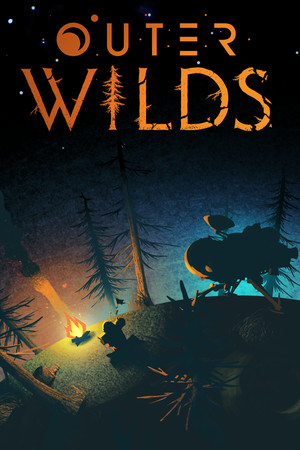
Outer Wilds
Score: 10/10

I'm sure you've seen the "What's a piece of media you wish you could forget so you could experience it for the first time again?" question floating around on social media before. Whether you sat around and really contemplated it or had a knee-jerk answer already ready that you knew in your heart was right, I'm here to tell you that whatever you named was probably wrong. Because the truth is, that question is not open-ended; it has only one correct answer, and that answer is Outer Wilds.

This is a game best experienced blind, and so I'll leave out any details that could give away its conceit and suffice to say that it's simply just a work of art, where every little piece of what it is has been carefully configured to get its ideas across just right. It's a game for the little scientist in you that yearns to explore, discover, hypothesize, and then finally test and see your conclusions bear fruit - or not. Few games have ever rewarded curiosity so well, and even fewer make curiosity their central conceit, both in textual narrative and ludonarrative.

Even with its basically horror DLC aside, Outer Wilds is not a game for everyone. This is a piece of art that requires patience and thoughtfulness. Be willing to fail and recontextualize your failures as learning experiences. And whatever you do, treat your first playthrough as something special - because you only get that one playthrough for the rest of your life. This is a game that can only be played once, and then you will spend the rest of your life wishing the Men in Black Neuralyzer was real and could be used repeatedly to wipe your memories of Outer Wilds so you could play this damn thing again. Alas.

Last Updated: 2026/03/04
Undertale
Score: 9.5/10

I've long had a reputation with my close friends as being a media snob, even back when I was as young as 14 years old. For a very long time in my life, The Legend of Zelda: Majora's Mask held steadfastly in my heart as my favorite video game, a position that I could easily foresee never being dethroned. So when I played Undertale in 2015 and told all of my friends that it had become my new favorite video game, everyone I knew immediately dropped what they were doing and played it. And the rest was history.

What can be said about Undertale that hasn't already been said? This game is a monumental work of art that revolutionized the story-rich indie genre and practically became itself a zeitgeist. It's also filled with references to a specific era of internet humor that may go totally over the heads of people who were not born between the years of 1990 and 2000. Undertale is a game that everyone who takes video games as art seriously should play, but it is not really a game for everyone. Its humor can be grating, its characters may be unlikeable to you, and you may find the gameplay too difficult. But you are really doing yourself a disservice if you still haven't played it yet, even if it's for no other reason than recognizing its cultural impact.

The game isn't perfect, especially when you consider how clunky the path to the Pacifist ending is, and I have issues with the handling of certain characters, particularly those that are highlighted in the game's darker moments. But its bullet hell gameplay, memorable soundtrack, and clever writing are more than enough to eclipse its rougher edges, and despite everything, I still consider Undertale easily one of the greatest games of all time.

Last Updated: 2026/02/04
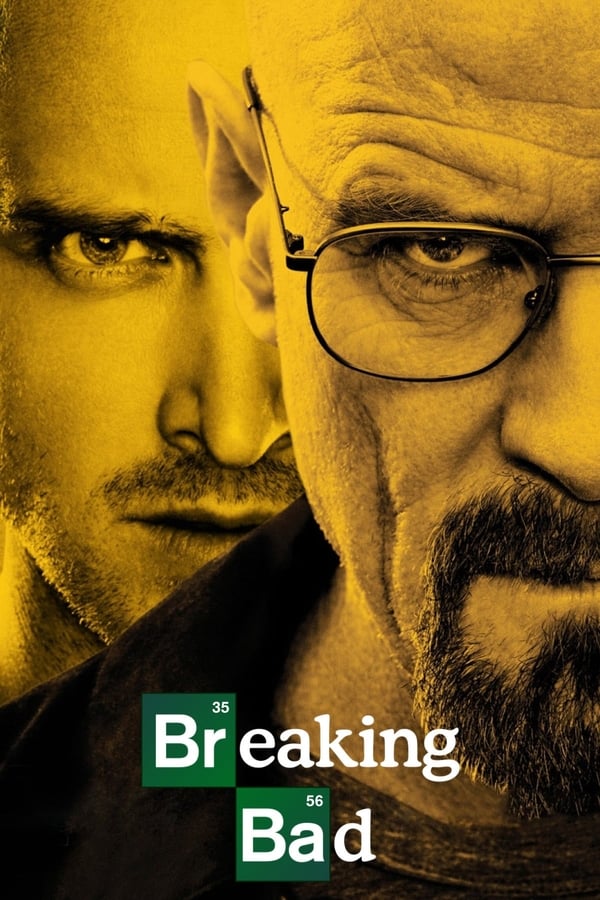
Breaking Bad
Score: 8/10

Breaking Bad is an incredible and critically acclaimed show with a well-deserved long list of accolades. It's also a show that I simply don't have very strong feelings about. A large part of this is likely due to its final season, which I felt caused it to lose a tremendous amount of momentum, though it does end up being able to scrape its way into a victorious finish.

It's got a loveable cast of memorable characters, and almost all of its characters of color are addicted to drugs or cartel members. Its direction is exceptionally witty and clean, and it's also one of the most well-known abusers of The Orange Latin America filter. Its female characters, particularly Skyler White, are something of a litmus test, gauging the viewer's ability to sympathize with a woman who stands up for herself and her family in a way that the viewer may find "bitchy" or annoying. (So many viewers failed this litmus test so spectacularly that actress Anna Gunn had to write an op-ed in the New York Times about it, and it's a crime that Vince Gilligan is still paying the price for today with his work Pluribus.)

All that aside, Breaking Bad is a charming piece of work. It's not really nearly as foundational as many people believe it to be, but it is a certainly a well-crafted piece of television that I just don't think about much outside of the many memes it spawned. (You are not the guy...)

Last Updated: 2026/02/04
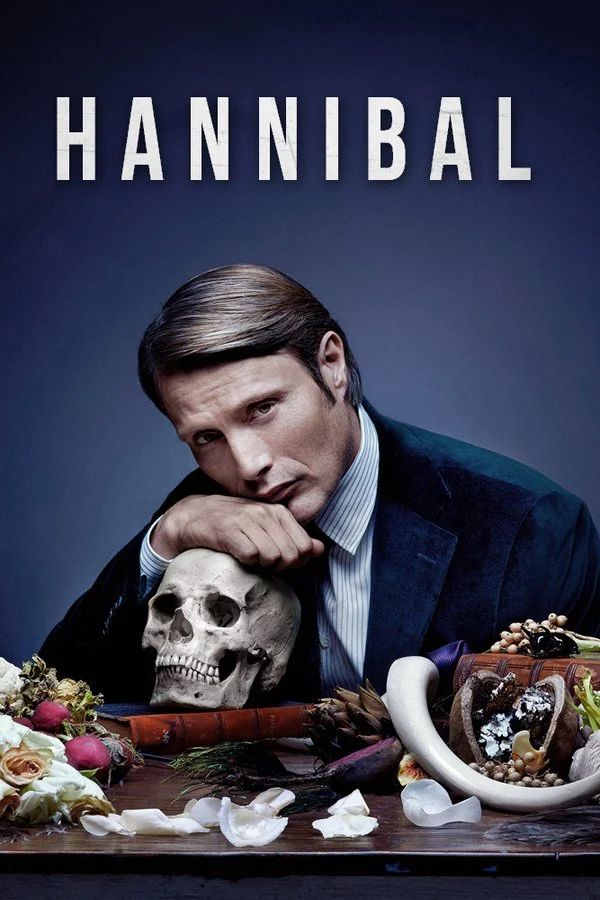
Hannibal
Score: 8.5/10

Hannibal, like all shows that use the cop drama framework, is not without its flaws. There are a few episodes in this three-season-long series that the show could easily go without and probably be better off. Still, though, what is there is truly a delight to behold. In Hannibal, the human body is simply just another medium of sculpture, and the nigh-pornographic directing ensures that every viewer is left feeling a little bit like a voyeur as the camera sumptuously crawls across every sinewed crevice and exposed marrow of the flesh on display. This is not a show for those faint of heart, but if you are able to get through the blood and guts, you will be treated to a wonderfully unique exploration of disturbed minds, two of which become intertwined in a deranged game of obsession that resembles love.

Last Updated: 2026/02/04
Scavengers Reign
Score: 9.5/10

In an era of stories filled with nonstop action and dialogue, where characters constantly turn to the screen and tell you how to feel and think, where any second that could be silence is filled with noise and blathering, Scavengers Reign stands out as a rare gem that is not afraid to take its time, breathe, and just be. That seemingly simple act of existence is a core theme of this series, where oftentimes things merely happen, and nature is a force (neither cruel nor caring) that we are a part of, live at the whims of, and sometimes even command control of. My educational background is actually in biology, and it is exceptionally rare that I get to experience a piece of media where I feel the designers of the world actually thought about it as a living, breathing ecosystem rather than a collection of cool xenobiota.

So much care is put into every second of Scavengers Reign. Every frame of animation is beautiful enough to be appreciated as a still image, and every character is artfully conveyed through not just their thoughtfully crafted dialogue, but in their movements and their actions. It is slowly paced, but never wastes time; everything you see is there for a reason, even if that reason is just the vibes.

This is not a show that you watch if you are interested in being wowed by clever plot twists. Scavengers Reign is completely uninterested in such games. This is a long form animated art piece that is best absorbed like a painting, and it is easily one of my favorites.

Last Updated: 2026/02/04
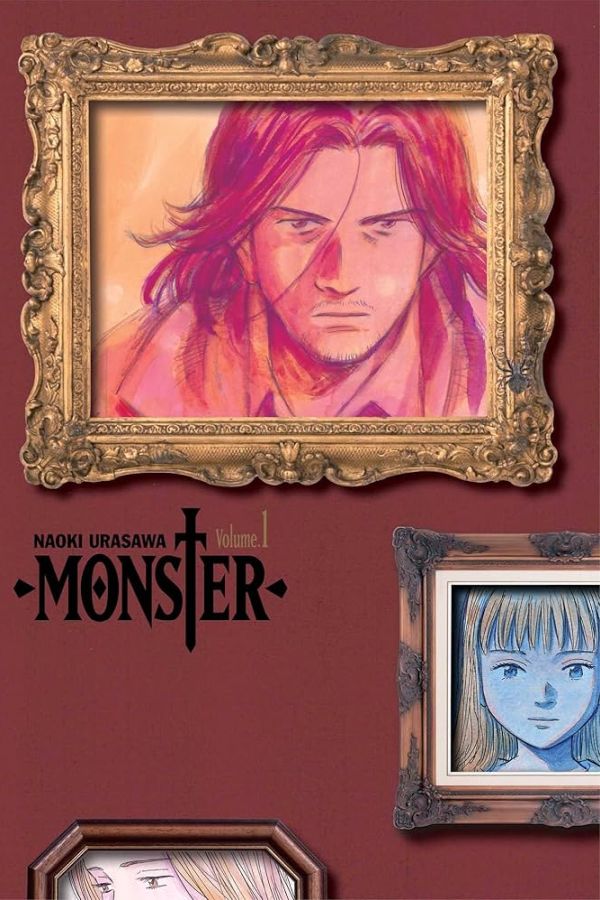
MONSTER
Score: 7/10

This was the first work by Naoki Urasawa I experienced, and if you had asked my opinion of it when I was only about a third of the way through, I would have told you it was a solid 9/10. As I crossed the halfway mark and proceeded further through it, however, my opinion of it gradually declined, increasingly only lightly here and there during a few high points, before settling at the number upon which it currently sits. I am not familiar with Urasawa's process, nor would I pretend to understand whatever masterful scheme he had devised when he decided to create three hundred extra side characters and two hundred extra side plots to go with them. What I can say, though, is that it's a testament to how strong the foundation of this work is that it still landed in the top half of the 10-scale for me despite all of the lollygagging that took place.

Urasawa's artwork is a joy to behold, and every panel is thoughtfully drawn. His ability to draw a variety of memorable designs is unfortunately somewhat eclipsed by the sheer size of the forgettable full cast of MONSTER, and I found myself blending a few faces together through no fault of his art but through every fault of his labyrinthian approach to writing this story. I have to wonder how much of the detouring was necessary, because at its core, MONSTER is a fairly simple narrative about a few core interesting characters. Perhaps it was all planned at the start, and I am not intelligent enough to grasp why the extras were needed. Or perhaps Urasawa just wanted to milk the manga a bit more before ending it with a bit of a whimper. Who can say?

Last Updated: 2026/02/02
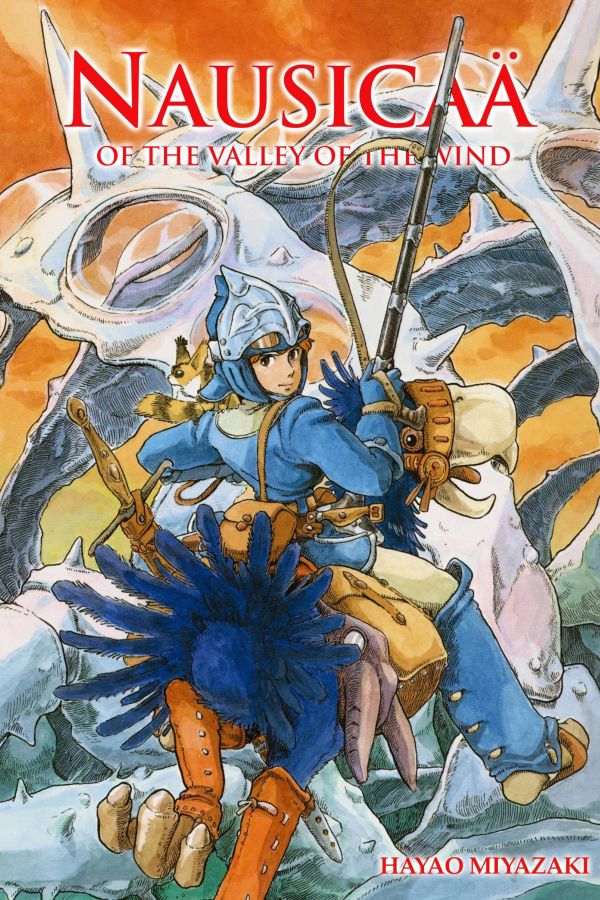
Nausicaä of the Valley of the Wind
Score: 9/10

Hayao Miyazaki is better known for his work as an animation auteur, and no doubt even the worst of his films is a more polished work than his longest-running serial manga, Nausicaä of the Valley of the Wind, which would become the basis of the 1984 film. It's evident in the busy and chaotic linework that drawing comics is not Miyazaki's strong suit, and yet, despite that, the original Nausicaä of the Valley of the Wind is such a marvel to read.

The worldbuilding that was only briefly touched upon in the film gets fully expanded here, and the overly simplistic conflict between the two kingdoms becomes a full-blown political drama. As much as I love the film as a standalone work, it cannot be emphasized enough how much had to be left out in the adaptation process. Those coming into the manga expecting it to simply be a comic version of the film story will find themselves instead entangled in a shockingly raw, contemplative story in which the flawed protagonist must battle against her desire to give in to what are ultimately deeply cynical - bordering on ecofascist - ideals.

This manga left a strong impression on me, and it is one of my favorite works of all time. (Hello, my literal various Nausicaä banner images plastered all over my socials, including this website.) It explores several themes of great personal interest to me: the relationship between man and nature (and whether they are even separable), the inherent selfishness of the human condition, and the burden of knowledge. It is also, in my opinion, Miyazaki's seminal work. I may not agree with all of Nausicaä's morals, or with Miyazaki's, for that matter, but the conversation it opened with me was certainly one worth taking.

Last Updated: 2026/02/03
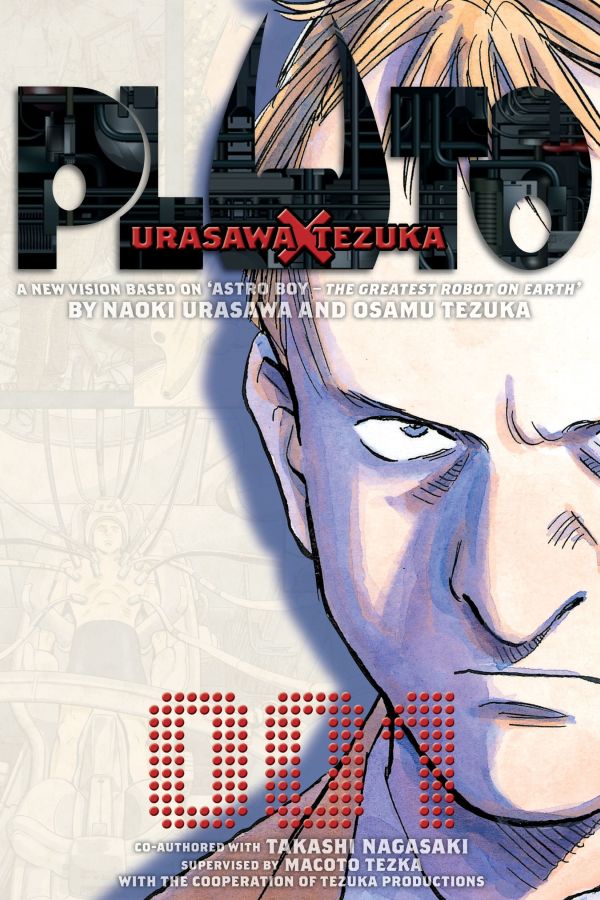
PLUTO: Urasawa x Tezuka
Score: 10/10

I will preface this by admitting I have not read nor watched the original Astro Boy in full, nor do I intend to. I did, upon finishing PLUTO, read just the original "The Greatest Robot on Earth" arc to understand what this work was an adaptation of. And I must say that, while I respect Naoki Urasawa's opinion that he failed to do Osamu Tezuka's Astro Boy justice, I have to wholeheartedly disagree. PLUTO is a masterpiece, and it goes so far beyond its original source material in scope that it's almost ludicrous to put these two works in the same conversation as each other.

Urasawa's interpretations of the Astro Boy character designs are a delight to the eyes. His art style, which tends towards the semi-realistic end on the spectrum of Japanese anime, adds a charming authenticity to the previously cartoonish figures of characters like Dr Tenma and Dr Ochanomizu. The gritty, realistic aspects of PLUTO also extend well beyond its visuals; its narrative is a very down-to-earth and human approach to the classic sci-fi tale of man vs machine, where, although you are shown from the very first chapter that protagonist Gesicht is a robot, it is often easy to forget his inhumanity in his moments of hesitation, sympathy, and love.

The pacing of PLUTO is slow but deliberate, the first half of its narrative meandering through an episodic structure that lays the groundwork for its themes. Despite this, there is no wasted space or anything that overstays its welcome. Everything culminates into a satisfying conclusion that clearly feels well-planned from the start. A true delight to read, and if you aren't into reading manga, the anime adaptation is a more than suitable alternative.

Last Updated: 2026/02/04